
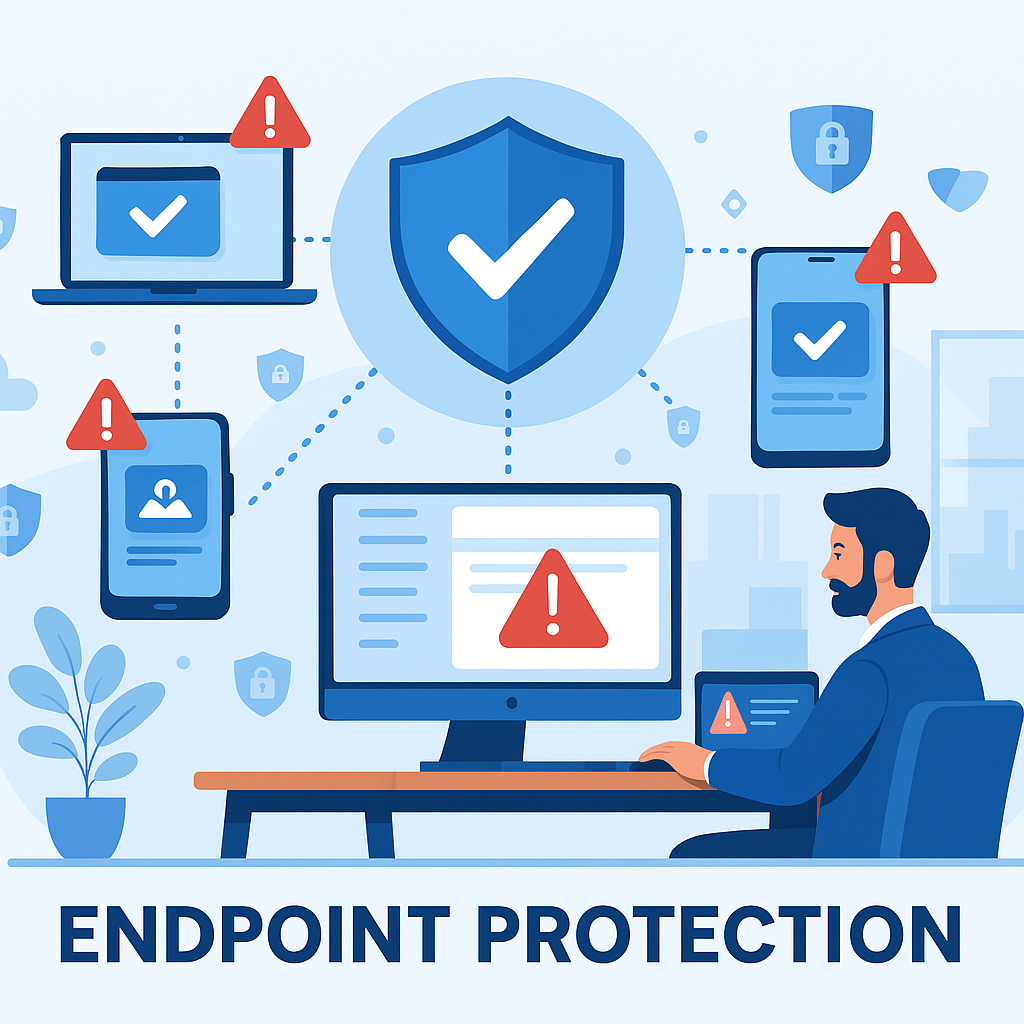
Small and mid-sized businesses (SMBs) have become prime targets for cybercriminals—not because they’re high-value individually, but because they often lack robust cybersecurity measures. In particular, endpoints such as laptops, smartphones, tablets, and desktop computers serve as gateways to larger networks, and when left unprotected, they create vulnerabilities that hackers are eager to exploit. For modern SMBs navigating digital transformation and hybrid work models, endpoint protection is no longer optional—it’s essential for ensuring business continuity, data integrity, and customer trust.
Endpoints are the most common point of access for cyberattacks. Every employee device that connects to your network creates a potential entry point for threats like ransomware, malware, spyware, and phishing exploits. Without a strategy to monitor, secure, and manage these devices, your business is left exposed. The consequences can be significant—from stolen data and disrupted operations to regulatory fines and lasting reputational damage. Even a single compromised device can lead to lateral movement across the network, allowing attackers to access confidential files, credentials, and financial systems.
With the rise of remote work, endpoint protection has become even more important. Employees are logging in from home networks, public Wi-Fi hotspots, and personal devices that may not meet corporate security standards. In this decentralized environment, traditional perimeter-based security models no longer suffice. Businesses must adopt a zero-trust mindset, treating every device as potentially compromised until verified. This requires endpoint security solutions that provide real-time visibility, control, and protection across all devices—whether on-premises or remote.
Modern endpoint protection platforms combine antivirus software with advanced threat detection, behavioral analysis, and automated response mechanisms. These tools are capable of identifying unusual activity, quarantining threats, and alerting administrators before damage spreads. Some even leverage artificial intelligence to predict and prevent attacks before they execute. Unlike older systems that focused solely on known viruses, today’s endpoint protection is proactive, intelligent, and adaptive to ever-evolving threats.
Another key element of endpoint security is patch management. Outdated software often contains vulnerabilities that attackers exploit to gain unauthorized access. Ensuring that all devices are running the latest versions of operating systems, applications, and firmware is critical. Many endpoint management platforms include automated patching to keep every endpoint updated without relying on manual intervention from end users or IT staff. This automation ensures consistency and reduces human error, which is one of the leading causes of data breaches.
Encryption also plays a vital role in securing endpoints. If a device is lost or stolen, encryption ensures that its data remains inaccessible to unauthorized users. Full-disk encryption protects all stored data, while email and file encryption secure information during transmission. Combined with strong authentication policies and remote wipe capabilities, encryption forms a solid defense against data leakage, especially in mobile or BYOD (bring your own device) environments.
For SMBs handling sensitive data—whether customer financial records, health information, or intellectual property—endpoint protection is often a compliance requirement. Regulatory frameworks such as HIPAA, PCI-DSS, and GDPR mandate secure handling of data, and failure to comply can result in hefty fines. Comprehensive endpoint protection helps ensure compliance by enforcing data access controls, monitoring device activity, and maintaining audit trails for reporting and investigation.
Employee education remains a cornerstone of any endpoint security strategy. Even the best tools can be rendered ineffective by careless behavior. Regular training on password hygiene, phishing awareness, and secure data handling empowers users to become the first line of defense. Coupled with endpoint policies like multi-factor authentication, role-based access control, and restricted administrative privileges, this human factor significantly reduces the risk of breaches.
Partnering with a trusted IT provider ensures that your endpoint protection strategy is tailored to your specific business needs. At ETS Technology Solutions, we offer endpoint management solutions that protect every device in your network with minimal impact on performance. Our team implements centralized dashboards for monitoring, real-time threat alerts, and remote remediation capabilities, giving you peace of mind whether your team is in the office, on the road, or working from home.
Cybersecurity isn’t just for large enterprises anymore. SMBs face the same threats but often with fewer resources to defend against them. That’s why investing in comprehensive endpoint protection is one of the smartest decisions you can make. It doesn’t just prevent attacks—it helps you recover faster, maintain compliance, and build trust with customers who count on you to protect their data.
If you’re unsure about the strength of your current endpoint protection, we can help. Schedule a free consultation to assess your risk exposure and learn how ETS Technology Solutions can implement a modern, scalable defense for your business.
If you are interested in learning more, schedule a call today.