
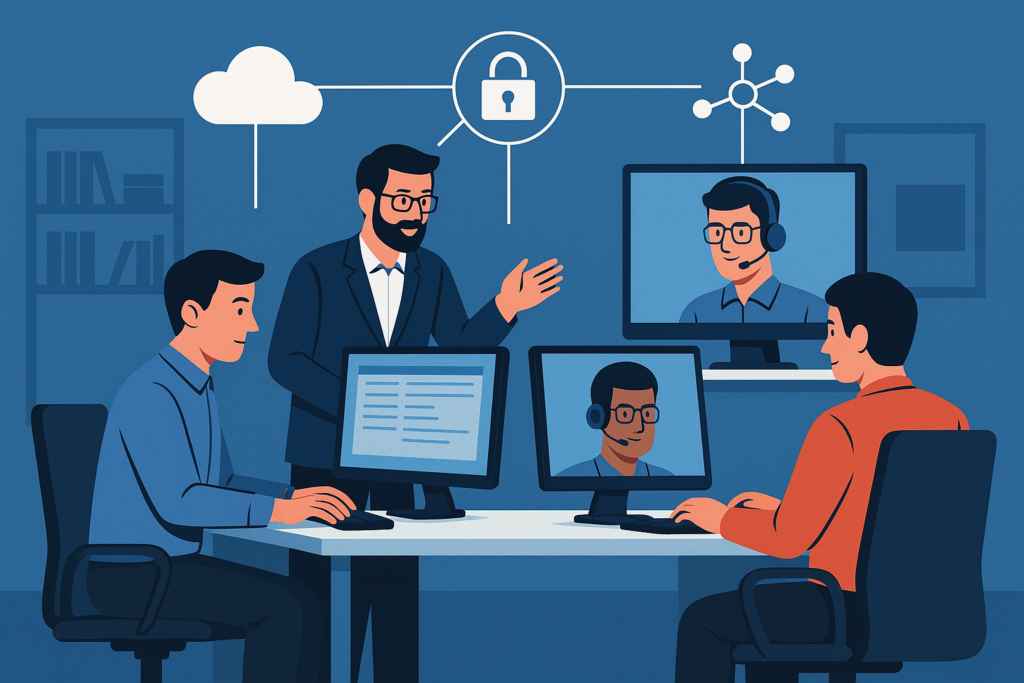
As cybersecurity technology continues to evolve, so do the tactics used by cybercriminals. Businesses invest heavily in firewalls, endpoint protection, email filtering, and advanced threat detection to safeguard their networks. While these technologies play an essential role in defending against attacks, they cannot stop every threat.
The most common target in nearly every cyberattack is not a server or a firewall—it is a person.
Employees interact with email, websites, cloud applications, customer data, and business systems throughout the day. Every click, download, and login represents an opportunity for cybercriminals to exploit human error. This is why cybersecurity awareness training has become one of the most valuable investments an organization can make.
When employees understand how cyberattacks occur and recognize the warning signs, they become an active part of the organization’s security strategy rather than its greatest vulnerability.
The Human Element of Cybersecurity
Technology alone cannot prevent every cyberattack.
Cybercriminals know it is often easier to trick an employee into providing access than it is to bypass sophisticated security systems. Social engineering attacks are designed to manipulate people into taking actions they would not normally take, such as clicking malicious links, opening infected attachments, or revealing confidential information.
Because these attacks rely on human behavior rather than technical vulnerabilities, employee education is critical.
A workforce that understands common attack techniques is far less likely to become the starting point of a security incident.
Phishing Attacks Continue to Increase
Phishing remains one of the most successful cyberattack methods because it targets human trust.
Attackers send emails that appear to come from trusted sources, including coworkers, executives, vendors, banks, or government agencies. These messages often create a sense of urgency, encouraging recipients to act quickly without carefully evaluating the request.
Examples include:
- Fake invoice requests
- Password reset notifications
- Package delivery updates
- Payroll changes
- Tax-related communications
- Executive requests for gift cards or wire transfers
Well-trained employees know how to verify these requests before responding, significantly reducing the likelihood of a successful attack.
Ransomware Often Begins with a Single Click
Many ransomware attacks start with something as simple as opening a malicious email attachment or clicking a fraudulent link.
Once malware enters a network, it can spread rapidly, encrypting files, disrupting operations, and demanding payment for data recovery.
Employee awareness training helps individuals recognize suspicious emails, avoid downloading unknown files, and report unusual activity before malware can spread throughout the organization.
Preventing the initial infection is far easier—and less expensive—than recovering from a ransomware attack.
Business Email Compromise Is Growing
Business Email Compromise (BEC) attacks are becoming increasingly sophisticated.
Rather than relying on malware, attackers impersonate executives, vendors, or trusted partners to convince employees to transfer money or disclose sensitive information.
These emails often appear legitimate and may reference real projects, invoices, or employee names gathered from publicly available information.
Training employees to verify financial requests through secondary communication channels can prevent costly fraudulent transactions.
Cybersecurity Awareness Reduces Risk
An informed workforce creates multiple layers of protection.
Employees who receive regular training are more likely to:
- Identify phishing emails
- Report suspicious activity promptly
- Create stronger passwords
- Use multi-factor authentication correctly
- Protect confidential information
- Recognize social engineering attempts
- Follow secure file-sharing practices
Each of these behaviors contributes to a stronger overall cybersecurity posture.
Training Should Be Ongoing
Cybersecurity awareness is not a one-time event.
Threats evolve continuously, and employees need regular updates to stay informed about emerging attack methods.
Organizations should provide training throughout the year rather than relying solely on annual compliance sessions.
Short, focused learning opportunities are often more effective than lengthy presentations because they reinforce security concepts without overwhelming employees.
Regular reinforcement helps cybersecurity become part of the organization’s culture.
Simulated Phishing Campaigns Build Confidence
Many organizations now use simulated phishing exercises to measure employee awareness.
These simulations send realistic—but harmless—phishing emails to employees and track how they respond.
Rather than punishing mistakes, simulations create valuable learning opportunities that help employees recognize similar threats in real-world situations.
Over time, organizations often see measurable improvements in phishing detection rates and incident reporting.
Security Awareness Extends Beyond Email
While email remains a primary attack vector, employees should also understand risks associated with:
- Text message phishing (smishing)
- Voice phishing (vishing)
- Malicious QR codes
- Fake websites
- USB devices
- Social media scams
- Public Wi-Fi networks
- Mobile applications
Modern cybersecurity training addresses these threats so employees can recognize suspicious activity regardless of where it occurs.
Leadership Plays an Important Role
Cybersecurity awareness starts at the top.
When leadership actively participates in training and follows established security practices, employees are more likely to do the same.
Executives should:
- Complete the same security training as employees
- Use multi-factor authentication
- Follow password policies
- Verify financial requests
- Encourage prompt reporting of suspicious activity
Building a culture of security requires participation at every level of the organization.
Measuring the Effectiveness of Training
Organizations should evaluate the success of their cybersecurity awareness programs using measurable data.
Key performance indicators may include:
- Phishing simulation results
- Incident reporting rates
- Training completion rates
- Password policy compliance
- Multi-factor authentication adoption
- Reduction in successful phishing attempts
These metrics help identify areas where additional education may be needed while demonstrating the value of ongoing training.
Cybersecurity Is Everyone’s Responsibility
Security is no longer the responsibility of the IT department alone.
Every employee who accesses company systems contributes to protecting organizational information.
Creating a security-conscious workforce means encouraging employees to ask questions, verify unusual requests, and report suspicious behavior without fear of criticism.
When employees understand that cybersecurity is a shared responsibility, they become one of the organization’s strongest defenses.
Investing in People Protects the Business
Technology will continue to evolve, and cybercriminals will continue developing new attack techniques.
However, organizations that invest in educating their employees are consistently better positioned to identify threats early, reduce security incidents, and recover more quickly when attacks occur.
Cybersecurity awareness training not only protects business information but also builds confidence among employees, customers, and business partners.
It demonstrates a commitment to safeguarding sensitive data while supporting long-term operational resilience.
Conclusion
Cybersecurity awareness training has become an essential component of every organization’s security strategy. While advanced security technologies provide important technical protections, employees remain the first—and often most important—line of defense against cyber threats.
By providing ongoing education, reinforcing safe online practices, conducting phishing simulations, and fostering a culture of security, businesses can significantly reduce their exposure to cyberattacks. Investing in employee awareness is an investment in the long-term security, stability, and success of the organization.
Empower Your Employees. Strengthen Your Security.
Technology is only as secure as the people who use it. Building a culture of cybersecurity awareness helps protect your business from evolving threats while giving employees the knowledge they need to make safer decisions every day.
If you’re interested in learning how the right technology strategy can help your business grow, improve security, and reduce downtime, schedule a consultation today.